
Your salesperson meets with a prospective client and comes back with good news. The company is interested, they have a problem your business can solve, and they’ve shared a budget.
Everything sounds promising.
But a few conversations later, things aren’t adding up.
The buyer expected more than the budget covers. Finance hasn’t approved the money. Or the company has the resources but isn’t ready to invest in solving the problem.
Now your salesperson is trying to make the numbers work.
Sound familiar?
For business owners and sales managers, poor sales budget qualification can become an expensive problem. Your team may be spending valuable time on opportunities without fully understanding what buyers are actually prepared to invest.
Sometimes the problem isn’t your pricing. It’s that your salespeople don’t understand what the buyer’s budget really means.
A Buyer’s Budget Doesn’t Always Tell the Whole Story
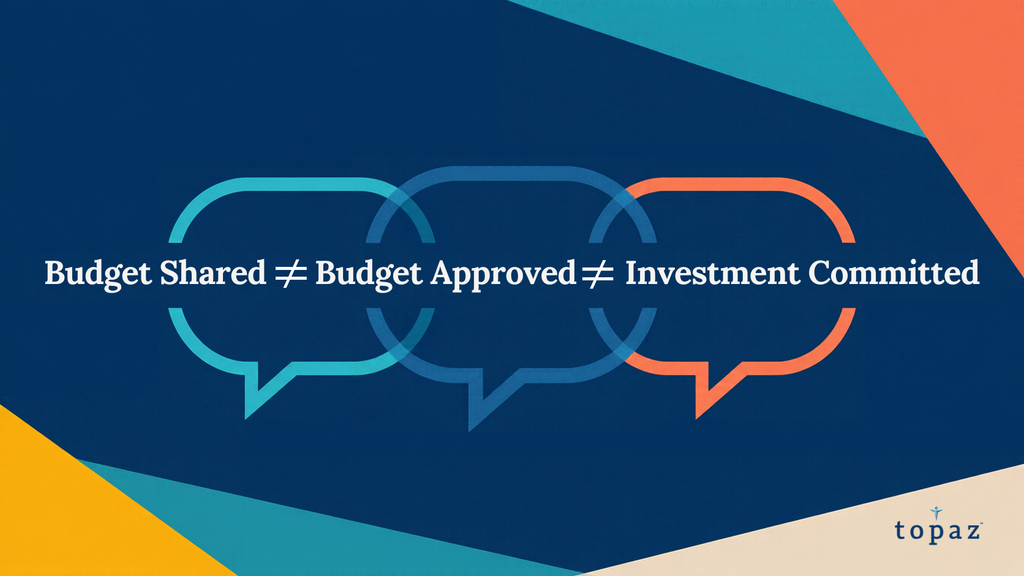
Let’s say a prospect tells your salesperson they have $20,000 available for a project.
That sounds encouraging, but where did that number come from?
Maybe the buyer researched what similar services cost. Perhaps someone in management suggested the amount. They may have based it on a previous purchase or simply guessed what would be reasonable.
Your salesperson hears the number and begins building a recommendation around it.
But what if that amount was only an estimate?
There’s a big difference between a company having money available and actually being prepared to spend it.
A business may have the financial resources to purchase your solution but still be uncertain about whether the investment makes sense.
If your salesperson treats every budget number as a firm commitment, they may be making decisions based on assumptions rather than a clear understanding of the opportunity.
Why Sales Budget Qualification Goes Wrong
Most salespeople ask prospects about their budget, but they don’t always take the time to understand what that number actually means. They hear an amount, record it in the CRM, and assume the opportunity is qualified without looking any further.
But consider two prospective clients who each say they have $25,000 available.
One has already secured approval, understands what the project involves, and is prepared to commit the necessary resources.
The other is still exploring options, hasn’t discussed the project with leadership, and isn’t sure what the investment should include.
Both opportunities may look identical in the CRM.
In reality, they’re very different.
When salespeople don’t recognize those differences, managers can end up reviewing opportunities that appear qualified but aren’t nearly as developed as everyone believes.
That’s a problem for both the salesperson and the company.
When the Buyer Expects More Than Their Budget Covers
Imagine a business owner contacts a sales consulting company because their sales team isn’t performing as well as expected.
They tell the salesperson they have a $15,000 budget for sales training.
The salesperson assumes they’re looking for a training program and starts preparing a recommendation.
But the owner expects much more than training. They also want help evaluating their salespeople, improving management, and fixing problems within their sales process.
Now there’s a problem.
The $15,000 budget may not be enough to cover everything the owner expects, but the salesperson didn’t realize that until much later.
Neither person necessarily did anything wrong. They simply weren’t on the same page about what the investment included.
When this happens, salespeople waste time preparing recommendations that don’t match the buyer’s expectations, and promising opportunities can fall apart.
If your team regularly runs into situations like this, it may be a sign that your salespeople need to better understand what buyers expect before recommending solutions.
Having the Money Doesn’t Mean They’re Ready to Invest
Money matters, but it’s not the only commitment a buyer needs to make.
A company may have the budget for a project but lack the time, people, or leadership support required to make it successful.
Take a business owner considering sales training.
They have the money available and recognize that their team needs improvement.
But what if the managers aren’t willing to participate in coaching or reinforce what the salespeople learn?
The financial investment may be there, but the organization might not be ready to make the changes needed to achieve its goals.
This is something salespeople can overlook when they focus entirely on dollars.
A prospect may look financially qualified while lacking the commitment necessary for a successful business relationship.
Being able to afford a solution doesn’t always mean being ready to invest in it.
What If the Buyer Won’t Discuss Their Budget?

Not every buyer is willing to share their budget, and there can be several reasons for that.
Some worry that revealing how much they can spend will affect the price they’re offered. Others may not have an approved budget yet or simply don’t know what the solution should cost.
This puts the salesperson in a difficult position.
Without understanding what the buyer is prepared to invest, it’s hard to determine whether there’s a realistic opportunity. But pushing too hard for a number can damage the relationship.
This is where sales experience and good judgment matter. A skilled salesperson knows how to handle these conversations, understand the buyer’s expectations, and recognize whether there’s a realistic opportunity without damaging the relationship.
What Poor Sales Budget Qualification Costs Your Business
Think about how much time your company spends on an opportunity before someone becomes a customer.
There are meetings, research, proposals, internal discussions, and sometimes hours of work from people outside the sales department.
Now imagine several salespeople spending that time on prospects who were never realistically prepared to make the investment.
Your team stays busy, but too much of that activity produces little return.
Poor budget qualification can also affect profitability.
If salespeople continually adjust recommendations to fit budgets they don’t fully understand, they may end up proposing work that doesn’t reflect the resources required to deliver it.
Winning that business isn’t necessarily a success if the project becomes difficult or unprofitable.
As a business owner, you want your salespeople spending time on opportunities that make sense for both your company and the buyer.
When that isn’t happening, it’s worth examining whether your team needs stronger qualification skills and a more consistent approach to evaluating opportunities.
How Topaz Helps Improve Sales Qualification
At Topaz Sales Consulting, we believe salespeople should understand their buyers well enough to recognize whether working together makes sense for both parties.
That’s part of our Buyer Facilitator approach.
Through our sales training and coaching, we help companies improve how their salespeople understand buyers, qualify opportunities, and recognize important information before recommending solutions.
We also work with sales managers to identify weaknesses in their team’s performance and develop stronger coaching and accountability.
Sometimes the issue isn’t the salesperson’s effort. It’s the skills, experience, or process they’re relying on.
Topaz helps companies address those issues so salespeople can make better decisions, have more productive conversations, and spend their time on opportunities that represent a good mutual fit.
Is Your Sales Team Spending Too Much Time on the Wrong Opportunities?
If your salespeople regularly struggle with budget discussions, unrealistic buyer expectations, or opportunities that turn out to be financially unqualified, it may be time to look more closely at your sales process.
The solution isn’t necessarily more leads or better pricing.
Your team may need stronger sales qualification skills and better coaching.
Topaz Sales Consulting helps companies identify those gaps and develop salespeople who can evaluate opportunities more effectively.
Schedule a consultation with Topaz Sales Consulting to discuss what’s happening with your sales team and how we can help.