
Topaz Sales Consulting President and Co-Founder Jorge Chavez recently joined host Mickey Anderson on the LoyaltyOps Unleashed Podcast for a candid conversation about business growth, leadership, sales hiring, artificial intelligence, and building a company that can thrive beyond its founder.
During the episode, Jorge shared the thinking behind Topaz, the company’s approach to sales consulting, and the work required to turn one person’s expertise into a scalable system that other people can carry forward.
Watch the full conversation below.
Changing How People Experience Sales
Jorge opened the conversation by explaining why Topaz Sales Consulting exists.
Traditional selling often relies on pitching, convincing, overcoming objections, creating pressure, and pushing for a yes. Topaz takes a different approach.
“We’re the antithesis of that,” Jorge said. “Almost everything they would do, tell, pitch, educate, make assumptions, we would say ask questions, listen, be present, don’t make assumptions.”
That belief is central to the Topaz Buyer Facilitator philosophy. Salespeople are trained to guide meaningful conversations, stay curious, listen closely, and determine whether there is a genuine mutual fit.
The goal is not to talk someone into buying. It is to help the buyer make a confident decision for their own reasons.
Building a Company Beyond One Person
Like many consulting firms, Topaz began with a founder who had deep experience and a proven ability to help clients.
Jorge spent 13 years in high-tech sales with companies including IBM and Adobe, selling to organizations such as Apple and Microsoft. He later became a business owner and independent sales consultant before co-founding Topaz.
As the company grew, the challenge changed.
The question was no longer simply, “How can Jorge help more clients?”
It became, “How can Topaz consistently deliver the same level of value through other people, systems, tools, and processes?”
Jorge credited his wife and Topaz Co-Founder, Caroline Chavez, with helping turn years of knowledge and experience into documented systems.
“She takes everything in my head and puts it into process,” he explained.
That partnership has helped Topaz develop a business that is not dependent on one consultant’s personality, memory, or availability.
Jorge described Topaz as a system made up of tools, processes, and people, all working together to create a consistent client experience.
“We’re not replicating me and what I do,” he said. “We’re replicating the client experience.”
Growing a Family Business With Purpose
The conversation also explored the opportunities and complexities of building a business with a spouse and bringing the next generation into the company.
Jorge and Caroline have worked together to build Topaz for more than a decade. Two of their three sons, Victor and Mitchell, have since joined the business, each bringing different experience, strengths, and perspectives.
Jorge acknowledged that working with family is not always easy. Business conversations can follow owners home, and the line between work and personal life can become thin.
Trust, shared purpose, and aligned values make the hard work worthwhile.
“We both want to see our kids set up for success,” Jorge said. “That feels great. That’s a motivator.”
Rather than pushing their sons into predetermined roles, Jorge and Caroline have allowed their responsibilities to develop around their individual talents.
That is an important lesson for any CEO or sales manager. A job description matters, but strong leaders also pay attention to where an employee consistently creates value.
Using AI Without Losing the Human Conversation
Jorge and Mickey spent part of the episode discussing how artificial intelligence may change sales.
Topaz is actively exploring and using AI tools, particularly for research, preparation, and pre-call planning. Salespeople can use AI to learn about a company, study an industry, identify possible business challenges, and prepare thoughtful questions.
Preparation, however, is only the beginning.
Once the conversation starts, the salesperson still needs to be present.
A tool cannot fully interpret the buyer’s tone, hesitation, body language, emotions, or the meaning behind an unexpected answer. A salesperson must listen, adapt, and develop relevant questions in real time.
“We use AI to prepare, but then it’s listening, asking questions, not making assumptions, staying detached from the outcome, seeking the truth, and accepting it might not be a good mutual fit,” Jorge said.
AI can support a buyer facilitator. It cannot replace infinite curiosity, empathy, judgment, or the ability to create trust during a live conversation.
Hiring High Performers Requires More Than a Good Interview
The conversation turned to one of the most expensive challenges business owners face: hiring the wrong person.
Many leaders hope to find a “unicorn” candidate who arrives fully developed, requires little direction, and immediately produces results.
Jorge cautioned against that expectation.
A strong hiring process starts with a clear job description. Leaders need to define the responsibilities, expectations, goals, and behaviors required for success.
Candidates must then be evaluated for both skill fit and culture fit.
“They may have all the skills in the world but be toxic to your culture,” Jorge said. “It’s a no.”
The hiring process should reveal what the candidate can truly do, not simply how well the candidate interviews. Once the gaps are identified, onboarding and training should be designed to close them.
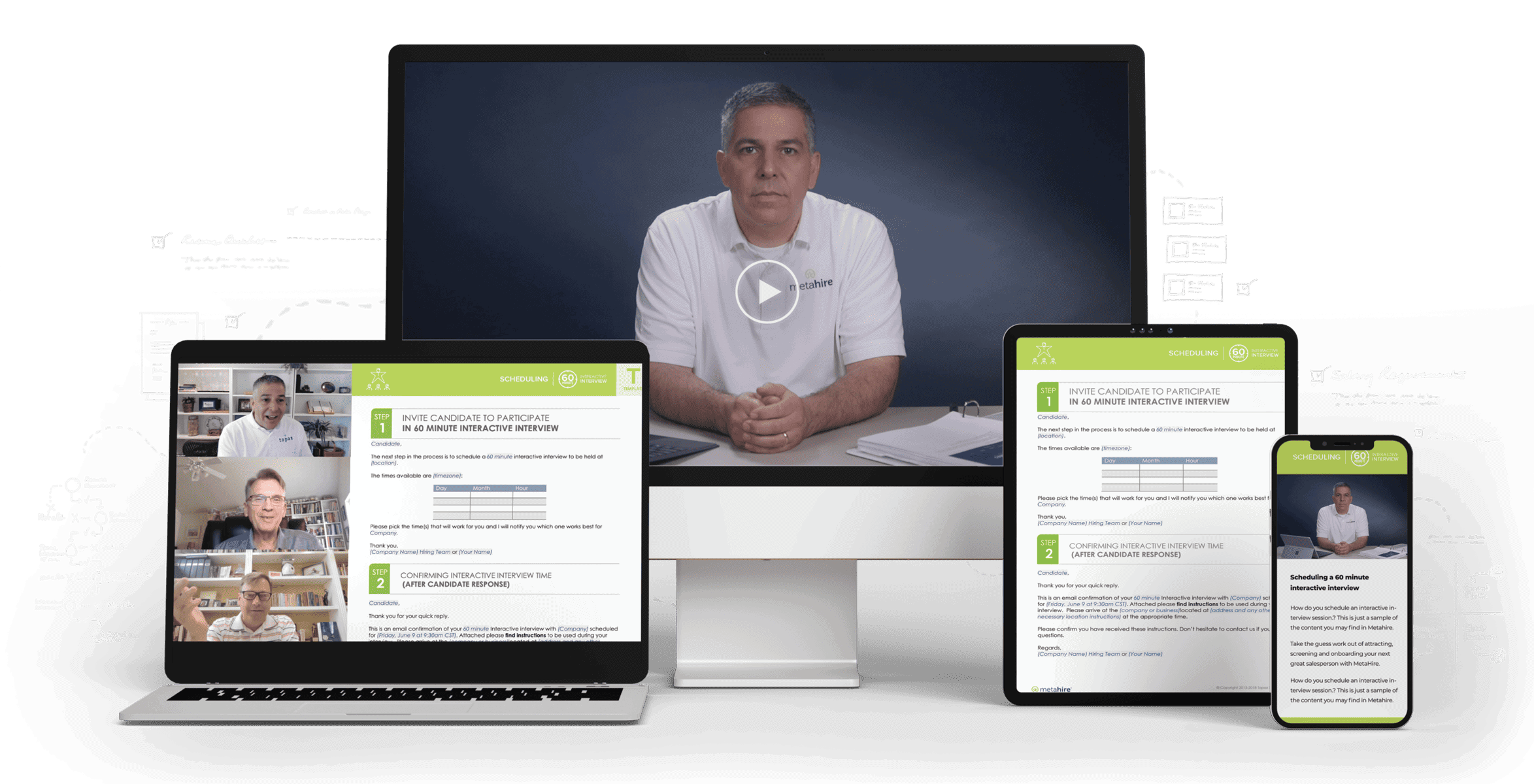
Topaz addresses this challenge through Metahire, its specialized sales hiring program. Metahire helps companies create a more disciplined process for attracting, screening, assessing, interviewing, selecting, and onboarding salespeople.
The investment required to improve hiring may feel significant until a leader calculates the real cost of a poor hire.
Jorge encouraged owners to consider what their last unsuccessful hire cost in compensation, management time, missed sales, lost opportunities, damaged relationships, and team disruption.
“There is no budget,” is a common response when leaders discuss a bad hire, Jorge noted. The money is simply lost.
Doing the work on the front end can prevent months of frustration on the back end.
Top Performers Expect Strong Leadership
High-performing employees do not want to work in a culture where excuses are tolerated and mediocrity becomes normal.
They want capable teammates, meaningful expectations, continued development, and leaders who hold themselves to the same standards they set for others.
Jorge offered two questions leaders should ask:
Why would a top performer want to work for your company?
Why would a top performer leave your company?
One of the leading reasons strong employees leave is a culture that tolerates poor performance and excuse-making.
That culture starts with leadership.
“If you find you have a culture of excuse-making and mediocrity, look in the mirror,” Jorge said. “It starts at the top.”
That may be a difficult message, but it also gives leaders somewhere productive to begin. They can model accountability, stop making assumptions, set a stronger standard, and coach their teams to do the same.
Growth Should Be Meaningful, Not Performative
Jorge and Mickey also discussed the pressure business owners feel to pursue rapid growth simply because other companies are doing it.
Jorge believes businesses must continue moving forward, but growth should reflect the company’s purpose, market, leadership team, and goals.
“Don’t let the world dictate growth,” he said.
Not every company needs to grow at 40 percent, chase a ranking, or imitate a fast-growth technology business. A successful company may be one that is profitable, ethical, provides meaningful work, serves clients well, and supports the owner’s personal and family goals.
Leaders should determine what responsible growth looks like for their business and what they are willing to invest or sacrifice to achieve it.
A Business Must Continue Solving Real Client Problems
When asked about the future of sales consulting, Jorge returned to a simple principle.
A business cannot survive unless it solves problems its customers value enough to address.
Topaz continues to develop its programs, tools, and services by listening to clients and understanding where sales organizations struggle.
The specific services may evolve as the market changes. The purpose does not.
“Our focus 100 percent is helping our clients thrive,” Jorge said. “We’re in the problem-solving business in the domain of sales.”
That means remaining adaptable while protecting the standards, values, and client experience that built the company.
Start With Why You Are Building
At the close of the episode, Mickey asked Jorge to leave business owners with one final takeaway.
His advice was to spend time understanding why they are building their companies in the first place.
A meaningful why influences culture, hiring, leadership, training, growth decisions, and succession.
It also helps an owner determine whether they are still in the right business or the right role.
“If you can get that figured out, it’ll never feel like a grind,” Jorge said. “You can build your culture around that. You can hire people who share your why. And that’s how you can get it to go past you.”
For Jorge, that is the work Topaz is pursuing now: building a great business for a greater purpose and preparing the people, systems, and next generation required to carry it forward.
About Topaz Sales Consulting
Topaz Sales Consulting helps companies improve sales performance through personalized sales training, sales hiring, and sales leadership development.
Topaz trains salespeople and sales leaders to guide decision-makers toward confident decisions using infinite curiosity, clear ground rules, and mutual fit.
Explore Topaz Sales Consulting, download the Ultimate Guide to Prospecting, or schedule a revenue strategy conversation to discuss what may be limiting your sales organization.
SCHEDULE A REVENUE STRATEGY CONVERSATION
This article was developed from Jorge Chavez’s conversation with Mickey Anderson on the LoyaltyOps Podcast.