
I was listening in on a discovery call I wasn’t running. The prospect had reached out on his own, so the sales rep had a warm room and an hour. Eleven minutes in, the rep decided he knew what the man needed and started walking him through a solution the prospect had never once mentioned. The prospect got quieter. Then he ended it. No next steps, no second meeting, just, “Send me some marketing material and I’ll reach out when we’re ready.”
Everything the rep needed was sitting in that room the entire time, and he never asked for it.
When someone reaches out to you, the first question should be:
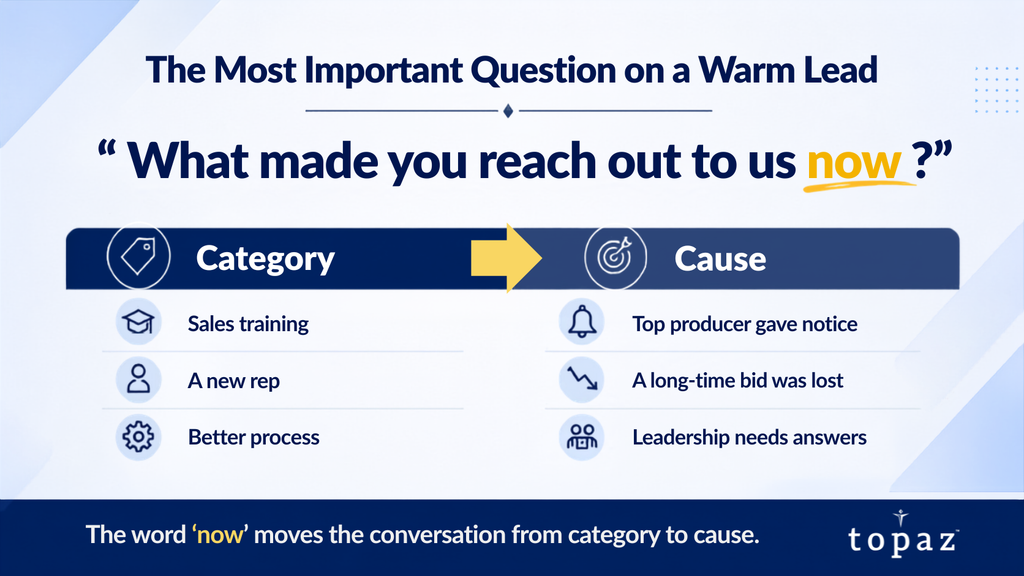
“What made you reach out to us now?”
That answer gives you their real problem in their own words, and every question after it becomes a follow-up to something they already said. The meeting runs itself from there.
Why Sellers Get This Backward
Traditional salespeople treat the first call as an audition. Somebody expressed interest, so now they have to prove they deserve the work. They prepare the background and the client list and show up ready to establish they’re worth hiring. That instinct comes from every cold call they’ve ever made, where they did have to earn the next ten seconds.
What it misses is this person called them. It’s a warm lead. They found the company, they read about it, they cleared an hour on their calendar. Nobody books an hour with a vendor they think is unqualified. There’s no need to keep proving.
What hasn’t been established is whether this prospect’s problem is one the company solves. That’s the only open question in the room, and it’s the one rarely asked.
So the seller pitches and tells until somebody says, “Send me a proposal.” The proposal gets polished and sent to someone whose actual problem was never discovered.
Followed by silence.
The rep decides the pitch was weak. It wasn’t. They just never found out what the call was about.
The rep I sat in on heard eleven minutes of context and filled in the rest himself, and once he started presenting the solution he’d assumed, there was no path back. Correcting him would have meant staying on the call. So the prospect went quiet, and then he ended it.
Sit in on your own team’s next three first calls and count how many get there too.
The Word Doing All the Work Is “Now”
Ask someone what they’re looking for, and you get a category. Sales training. A new rep. Better process. Categories are useless because everyone in your market claims the same one.
Add “now,” and the answer changes shape completely. Now forces them out of the category and into an event. Their top producer gave notice in March. They lost a bid they’d won for six years running. Their son joined the business and can’t close anything. A board member asked a question at the last meeting they couldn’t answer.
Nobody wakes up in the middle of the night wanting sales training. They wake up because something happened. The event is the real problem. The category is the label they put on it while they were searching.
This matters most with people you’ve already met. Someone you had a good conversation with in March reaches out in September. Every instinct says pick up where you left off, because you already know their situation.
You don’t. You only know their March situation. Whatever they were feeling in March was mild enough to sit on for six months. Something moved it, and the thing that moved it is the entire reason you’re talking again. Ask what made them reach out now and you get September’s problem instead of March’s, and those are rarely the same problem.
Here’s what surprises people the first few times they ask it. The answer comes fast. Most prospects tell you immediately and specifically why they called, because they’ve been carrying the thing around unnamed for weeks and they want it out of their hands. That’s what they came to you for.
The answer they give you in that first breath is the headline. What comes after it is what they’ve been thinking about at two in the morning.
If your team’s first calls keep ending in proposals that go quiet, this gap is where it starts. This is the discipline behind a stronger Buyer Facilitator sales conversation.
The Second Thing They Say Is the Deeper Truth
Here’s the part that takes discipline. The first answer is rarely the whole thing. It’s the summary they rehearsed on the way to the call. The real content shows up in the sentences and the follow-up answers after it, as long as you leave room for it.
So you don’t move on. You follow the thread. Whatever they just said, your next question comes out of it.
They tell you their VP of sales left in March. You ask what’s happened in the four months since. They tell you nobody picked up his accounts. You ask which accounts. They name two, and one of them is 30 percent of revenue. Now you’re inside the actual problem, and it took three questions.
None of those questions were on a list. Nobody could have prepared them, because they came out of what the person in front of you actually said. That’s the whole skill. Stay present, listen to the answer instead of loading your next question, and ask the obvious follow-up that a distracted person would miss.
This is what separates a trusted adviser from a vendor. It isn’t credentials, and it isn’t tenure. It’s that you were the only person who asked the second question. An expert-level question is almost never clever. It’s specific, and it’s only available to someone who was actually listening.
Twenty minutes of this and they’ll have told you things they didn’t plan to tell you. Not because you extracted anything, but because nobody had asked before.
What This Costs When You Skip It
A physical security company came to us about their sales hiring. The conversation ended with them deciding to run the process themselves. They had done it before, they knew their industry, and they didn’t see what a structured process would add.
They hired an account executive.
Fourteen months later, they called us back. We sat down and added up what that one hire had actually cost them. Salary. Onboarding. Training hours from people who had their own numbers to hit. The accounts that sat uncovered while he was ramping and the business that went somewhere else during those fourteen months. The total came to more than half a million dollars.
Half a million dollars for one hire that a conversation could have caught.
What made the second call different was that we asked the question. What’s happening now that made you reach out? And the answer was not the answer they gave the first time. The first time it was about filling a seat. The second time it was about what fourteen months of a wrong seat had done to the rest of the business. Same company, same category, completely different problem, and the only thing that surfaced it was asking.
Want to know how your own first calls are running? Book a call with one of our sales consultants. We’ll walk through your last sales conversation together and pinpoint where it came off the rails. Yes, Let’s Review a Sales Conversation.
What This Looks Like on Monday
Start your next discovery call by asking what made them reach out now. Then stop talking.
Write down their words instead of your paraphrase. The exact phrase they use for their problem is the phrase that goes in the proposal later. When an owner says we’re bleeding people, you don’t write retention challenges. You write bleeding people, because that’s the sentence that will make them nod when they read it back.
Then keep following. Every question comes out of their last answer. If you catch yourself reaching for something you prepared, you’ve stopped listening.
At the end, say what you actually think about fit.
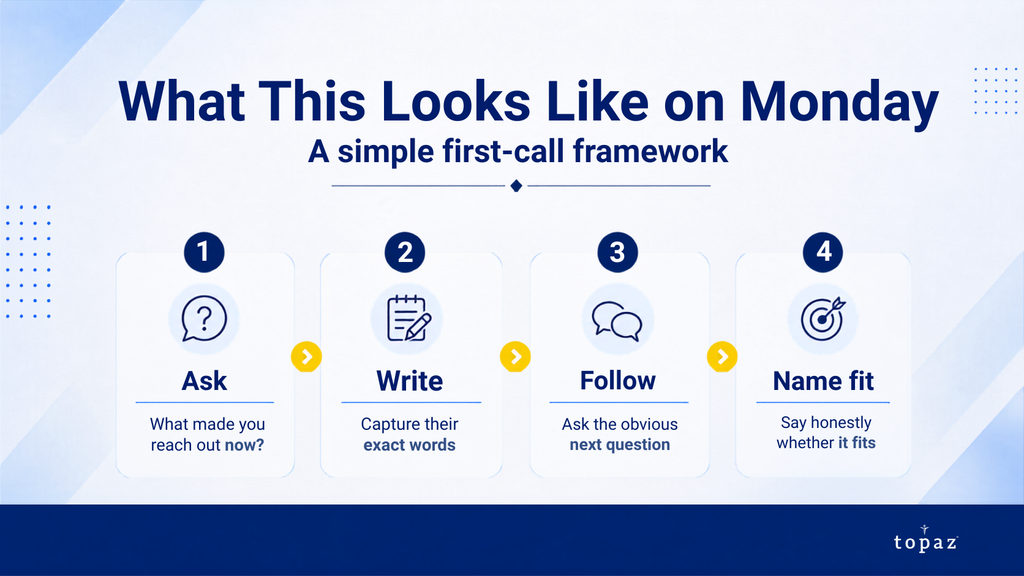
If it’s there, name what you heard and what you’d do about it. If it isn’t, say so and tell them why. You’ll lose a proposal you were going to lose anyway and gain someone who remembers you were honest with them.
The Question Is the Whole Meeting
That rep had everything he needed. A prospect who came to him, an hour on the calendar, and a man sitting there willing to say what was wrong. He filled the room with his own assumptions instead, and the call ended the way those calls end.
Ask what made them reach out now. Set the conditions where they can answer it honestly. Then follow what they give you.
If your last few first calls ended with a proposal and then silence, we’d like to hear what happened on them. Schedule a Sales Discovery Call.
Frequently Asked Questions
What should you ask on a first sales call?
Ask what made them reach out now. When a prospect contacted you first, that question surfaces the event behind the inquiry rather than the category they used to describe it. Every question after it should follow from their answer instead of coming off a prepared list.
How do you open a discovery call without sounding scripted?
Start by setting ground rules in your own words. Tell them there’s no pressure either way and that a no is a fine outcome. Then ask one open question and stop talking. Scripts sound scripted because the second question was written before the first answer arrived.
Should you present your solution on the first call?
No. Presenting on the first call trades the only thing that meeting can produce, which is understanding their situation, for a chance to look capable. They already think you’re capable or they wouldn’t have called. Save capabilities for the second conversation, when you know what to point them at.
What do you ask a prospect you’ve spoken with before?
The same question, and it matters more here. Their situation in March isn’t their situation now, and something specific moved it enough to make them call again. Picking up where you left off means solving a problem they’ve already stopped caring about.
How much should a salesperson talk on a discovery call?
Under a third of the call. Past that, they ran a presentation and called it discovery. The simplest fix is to make every question a follow-up to the prospect’s last answer, which makes it structurally difficult to steer back toward your own material.
What if the prospect gives you a vague answer?
Most prospects answer this one immediately, because they’ve been carrying the problem around unnamed and want it out. When the answer does come back vague, sit in the pause rather than filling it. If it still doesn’t come, ask what changed in the last ninety days.
How do you know if a prospect is a good fit?
You know when you understand the event that made them call and can say honestly whether you’ve solved that before. Fit is about whether their real problem matches your actual capability. Anything you have to argue for isn’t fit. It’s a stretch you’ll pay for during delivery.
What’s the difference between a discovery call and a sales pitch?
A pitch is built before the call and delivered regardless of who shows up. Discovery gets built during the call out of what the person says. The test is whether the meeting would have gone differently with a different prospect in the chair. If it wouldn’t have, you pitched.