HarborPoint Finance Services operated from the 14th floor of a historic building in downtown Chicago. The firm survived the 2009 financial crisis, but only narrowly. In the years that followed, asset growth stalled, referrals declined, and advisors worked hard with little return. The team was busy, fatigued, and increasingly concerned about the firm’s direction.
Sarah Whitman, HarborPoint’s managing partner, faced pressure on all sides. She was known for her steady leadership and client trust. At home, her father’s medical bills mounted. At work, her team’s increased efforts yielded little progress. The strain was taking its toll.
Each Monday, a routine followed: pipeline reviews, forecast discussions, and lengthy conversations about market conditions. Despite the activity, progress was minimal. Sarah felt the weight of responsibility, aware that continued stagnation could lead to burnout among her team.
That was when she called Topaz Sales Consulting.
She was direct from the outset. She did not want motivational speeches or new scripts. In the first meeting, she stated, “I don’t need my team fired up. I need them clear.”
Topaz began as experienced consultants do: asking questions, observing calls, listening closely, and taking notes. They then provided candid feedback to both advisors and management.
They found no lack of effort, but rather a team entrenched in routine. Advisors defaulted to pitching, managers focused on activity over critical thinking, and hiring prioritized presentation over judgment. The core issue was proximity: everyone was too close to recognize these patterns.
Change occurred incrementally. An advisor paused to ask, “What’s making this decision hard right now?” instead of rushing to recommend. A manager replaced a forecast review with genuine coaching. Sarah realized she had been shielding her team from discomfort when they needed support in navigating it.
Topaz trained the team to act as Buyer Facilitators, emphasizing curiosity over persuasion and establishing clear expectations with prospects. The team learned to accept “no” without viewing it as failure, shifting their focus from pushing for outcomes to enabling clients to make informed decisions.
Within three months, results improved. Deals closed with less friction, sales cycles shortened, and clients were more at ease. Advisors gained clarity and confidence in their roles, and team morale improved as the work regained purpose.
One night, Sarah stayed late, reflecting as city lights illuminated the river. The pressure remained, but now it signified momentum and the responsibility to sustain progress, rather than fear of decline.
HarborPoint did not become a different firm; it became more focused. The team improved client engagement, decision guidance, and identified previous blind spots. Effective sales consulting often reveals these issues. Most teams have effort and intent, but lack the perspective to identify obstacles.
What is Sales Consulting, and How Does it Work?
Sales consulting is a business advisory service that helps organizations develop growth strategies. Sales consultants work with clients to identify opportunities and challenges, offer guidance, and recommend solutions.
What is a sales consulting company typically hired to solve?
This may involve developing sales strategies, teaching techniques, providing ongoing coaching to sales teams and leaders, and helping organizations better understand customer psychology. In some cases, a sales consultant may serve as an interim Sales Manager for the entire sales operation.
An effective sales consultant transforms businesses through strategic, analytical, and creative approaches. They assess current performance, clarify goals, and develop tailored sales strategies, combining these with coaching and training. Partnering with a strong sales consulting firm provides a customized experience that enhances sales, leadership, and hiring processes.
Check out our blog for more information about sales consulting, how it works, and how we help clients scale their sales efforts.
A Sales Consulting Firm Brings Clearer Perspective to the Work
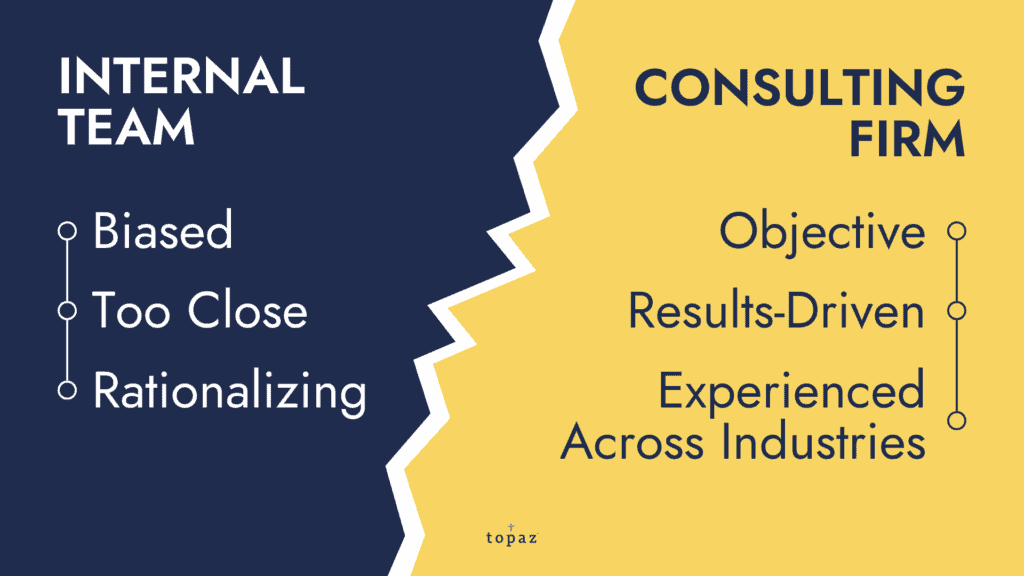
Internal teams often develop biases simply by being deeply involved in the business. Familiarity with company culture and systems can make it difficult to recognize outdated practices. Teams may rationalize weak results, tolerate ineffective habits, and protect familiar processes, even when they are no longer effective.
An external sales consulting firm offers a fresh perspective, free from internal traditions and company politics. Their role is to objectively assess the situation, provide honest feedback, and drive improvement. This distance enables consultants to identify patterns that internal teams may overlook due to their proximity to daily operations.
This objectivity is a key advantage of external consultants. While internal teams may rationalize performance gaps, consultants identify and address them directly. They may highlight issues such as pursuing poor-fit prospects, rushing discovery, or hiring based on likability rather than capability. This feedback provides valuable clarity and can accelerate improvement.
The Power of a Buyer Facilitator (vs. Traditional Selling)
Many internal teams unintentionally default to pitching, focusing on product features, and moving quickly to recommendations. However, buyers often need guidance to clarify their situation, and that guidance begins with effective listening.
Effective sales consulting helps teams shift to a Buyer Facilitator approach. Reps learn to ask insightful questions, identify genuine needs, and guide conversations with curiosity. The objective is to help buyers make informed decisions, even if the answer is no.
The difference is evident in conversations. Traditional salespeople focus on product strengths and company differentiators. Buyer Facilitators begin by understanding the buyer’s challenges, previous efforts, stakes, and decision barriers. This approach creates credibility by prioritizing understanding over persuasion.
When salespeople prioritize discovery, buyers become more open and candid, enabling more productive sales conversations.
Sales Hiring: The Silent Killer of Growth?
Many organizations mistakenly hire salespeople using the same criteria as other roles, only to find that strong interview performance does not guarantee success. Sales hiring requires distinct skills, mindsets, and behaviors.
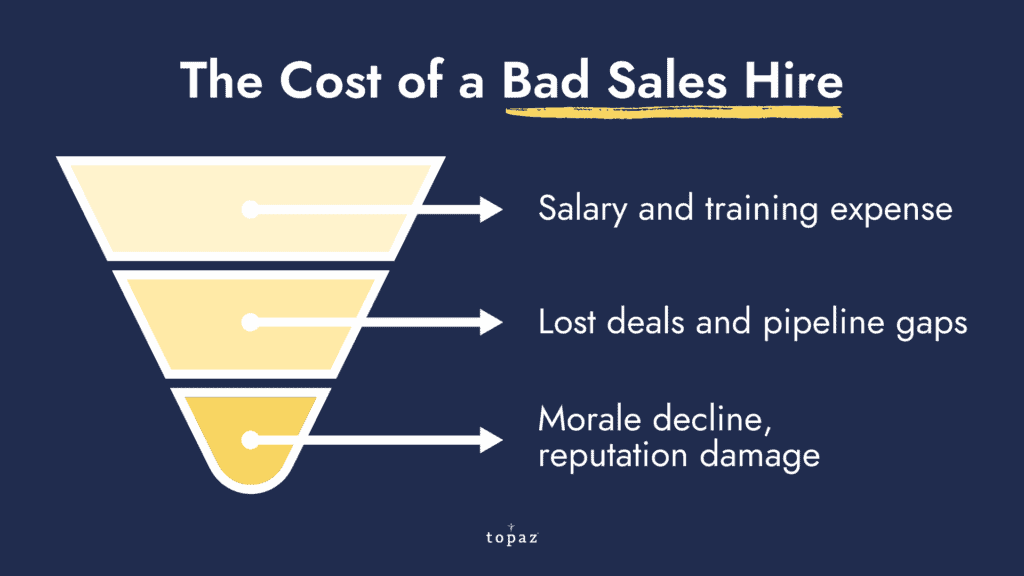
A poor sales hire incurs costs beyond salary, including management time, lost momentum, team frustration, and potential damage to clients. Often, candidates who appear polished in interviews struggle with rejection, avoid difficult questions, and lack the discipline needed for success, leaving leadership to reassess their hiring process.
A robust sales hiring process is essential. Effective sales consulting firms assess candidates for traits that drive success, such as resilience, curiosity, coachability, sound judgment, and composure under pressure. Systems like Metahire help organizations identify these qualities early, reducing the risk of hiring based solely on interview performance.
Coaching and Leadership Development
Internal leaders often mistake management for coaching, focusing on metrics and directives rather than skill development and accountability. Genuine sales coaching remains uncommon.
Consultants understand that leadership coaching is critical to the execution of strategy. Top firms often dedicate at least half of their process to coaching both representatives and managers.
Effective coaching is not micromanagement. It focuses on improving how representatives ask questions, challenge assumptions, and handle difficult conversations. It also encourages leaders to move beyond data analysis and actively shape team behavior.
Sales Consulting Helps Teams Build Trust Through Better Questions
Many prospects are cautious of salespeople due to past experiences with aggressive tactics and vague promises. By the first meeting, buyers are often guarded, which is a common reality in today’s sales environment.
Effective sales consulting addresses buyer skepticism by teaching representatives to ask better questions and listen attentively. Trust develops when buyers feel understood, which requires slowing down and exploring their true needs.
Here, empathy becomes a practical skill. Effective representatives uncover both business and personal impacts by asking targeted questions about costs, previous attempts, and persistent challenges. These questions advance the conversation and demonstrate genuine attention.
Many internal sales teams skip that part. They have been trained to get to the pitch quickly. Many internal sales teams bypass this step, focusing on quick pitches and feature explanations. This approach feels rushed. Buyers engage more when conversations are relevant and tailored to their situation. A salesperson can earn credibility. When reps focus on the person in front of them and not their presentation, buyers engage honestly, share what matters, and start trusting the conversation.
Read our article: What a Sales Consultant for Small Business Does (And Why It’s Not What You Think)
Sales Consulting Helps You Use Technology With More Discipline
Internal teams are quick to adopt new tools. CRMs, automation, AI, sequencing platforms, dashboards. None of that is a problem on its own. The issue starts when the technology becomes the strategy. A tool can organize activity, speed up tasks, and make reporting easier, but it cannot fix a weak sales process or replace good judgment.
Strong sales consulting helps companies use technology more effectively. The goal is not to pile on more software. The goal is to ensure the tools support the way buyers actually make decisions and the way reps are expected to sell. That means your CRM should do more than collect notes and track tasks. It should help the team see where deals really stand, what commitments have been made, and what needs to happen next to move an opportunity forward.
Many companies already have some automation in place, which is a good start. Maybe emails are being triggered, follow-up is more consistent, or certain admin tasks are happening faster. That can absolutely help. But most small and mid-sized businesses still end up with gaps between the technology they own and the processes their teams actually follow. They have tools, but not enough alignment. The result is usually a cluttered system, inconsistent usage, and a CRM that holds a lot of information but offers little clarity.
That is where outside guidance can be useful. Good sales consultants help teams cut through tech bloat and focus on the tools that support real movement in the sales cycle. They help define what belongs in the system, what should be automated, what requires human review, and how the entire setup can become a reliable source of truth versus another layer of noise.
When You Should Bring in a Sales Consulting Firm
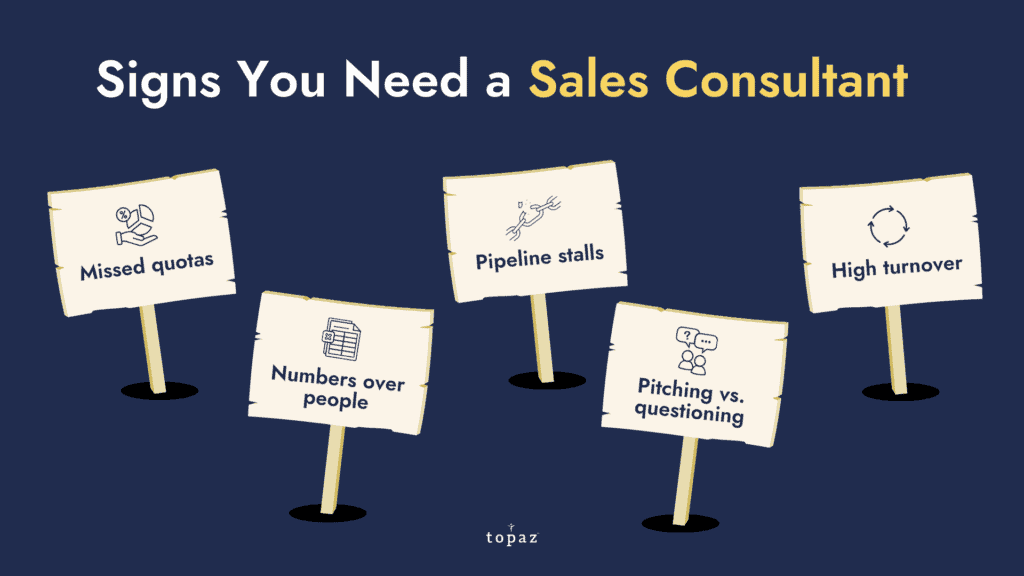
Your internal team probably is not broken. More often than not, it is too close to the work to see its own weak spots clearly. That is usually the moment when outside help becomes valuable. If quotas are being missed quarter after quarter, deals keep stalling mid-pipeline, turnover stays high, managers focus more on reports than on people, or reps spend more time pitching features than asking thoughtful questions, those are strong signs that the team needs a fresh perspective.
This is where outside sales consulting can make a real difference. Internal teams bring commitment, effort, and business knowledge. An external consultant brings distance, objectivity, and the ability to spot patterns the team may have normalized. Put those together, and you often see a clear path to move forward. The habits your team no longer notices can quietly drain revenue for a long time until someone names them and helps correct them.
That is one of the biggest advantages of a strong sales consulting partner. They help uncover what is holding the team back, address it directly, and equip people to sell in a way buyers actually respond to. So if your team has been working hard without seeing better results, it may be time to stop asking only for more effort and start asking whether the current sales approach is serving the business.
Don’t let your team keep overlooking what a good consulting firm can help uncover with a fresh, objective perspective. Schedule a strategic conversation.
FAQs
How do I know we need B2B sales consulting rather than just “more leads”?
Win rates are slipping, deals stall in the middle stages, managers live in forecasts instead of coaching, or discounts are the only lever that moves deals? You have a system issue, not a top-of-funnel issue. A B2B sales consulting firm refines definitions, conversations, and coaching to optimize conversion in the existing pipeline.
What outcomes should we expect in the first 90 days of a sales consulting engagement?
Cleaner pipelines, fewer “maybe” deals, stage-exit compliance, buyer-owned next steps, and a weekly coaching cadence that improves call quality. Revenue lift follows your sales cycle, but leading indicators, such as time-in-stage and next-step slippage, improve quickly.
Will we have to change our CRM or tech stack?
Usually no. A good sales consulting partner tightens stage gates, fields, and workflows inside the CRM you already use. If tooling is the constraint, we recommend light adjustments plus add-ons, but process comes first, and tech supports it.
What’s the difference between sales training and B2B sales consulting?
Sales training teaches skills. B2B sales consulting designs the system in which those skills live: tight definitions, a repeatable conversation, a manager-coaching rhythm, and instrumentation that drives behavior. Training sticks when the system reinforces it. We combine the best of both to give you a well-rounded, consultative, hands-on experience.