The deal looked strong until one question changed the room: “Who actually sells this work?”
The financials were solid. The owner built a respected company with loyal customers, healthy margins, and room to grow. Investors reviewed the books, studied customer concentration, examined operations, discussed leadership transition, and mapped growth opportunities.
On paper, the deal appeared promising.
Then the conversation moved to sales.
The owner was still involved in most major opportunities. The sales team was busy, but not especially disciplined. There was no shared sales process. The sales manager had been promoted because he was the top producer; he must know how to coach a team, right? New sales hires were chosen mostly because they interviewed well, had industry experience, and “felt like a good fit.”
That is when the specific sales risk came into focus: the team’s dependency on the owner for major sales opportunities.
The company lacked a true sales engine. It had a founder with strong relationships, salespeople with irregular habits, and a growth plan assuming sales would scale.
Sales is a key investment risk often overlooked.
The Sales Function Deserves a Closer Look
Investors and acquisition-minded leaders are usually very good at looking under the hood. They review financials, operations, legal exposure, customer concentration, technology, leadership, market conditions, and development possibilities.
That work matters.
However, the sales function often gets a lighter review than it deserves, which can mask key risks. Revenue is examined. The pipeline may be discussed. The owner may explain how the company wins business. The sales leader may give a confident overview. Still, a few important questions can go unasked.
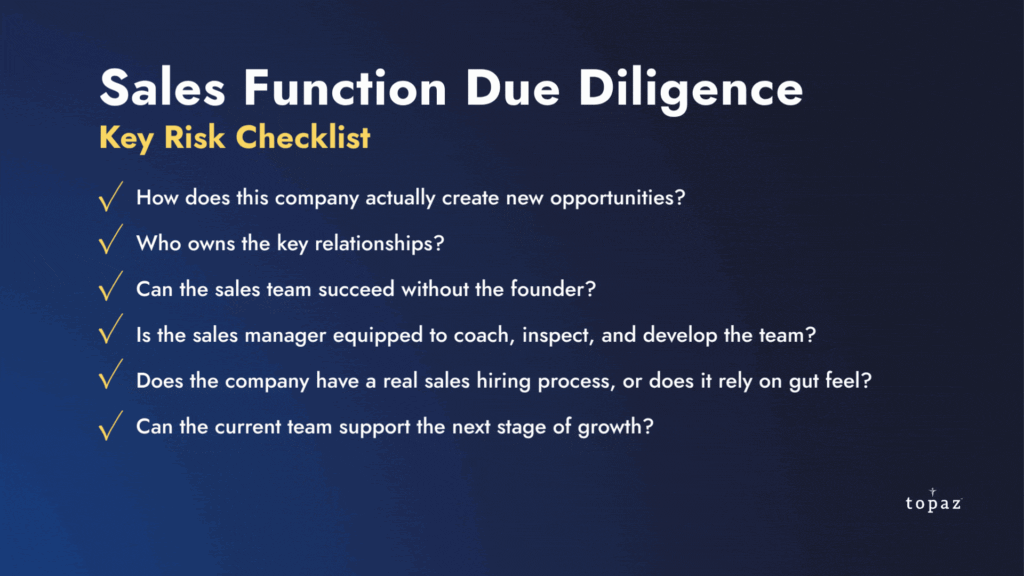
- How does this company actually create new opportunities?
- Who owns the key relationships?
- Can the sales team succeed without the founder?
- Is the sales manager equipped to coach, inspect, and develop the team?
- Does the company have a real sales hiring process, or does it rely on gut feel?
- Can the current team support the next stage of growth?
These questions assess whether sales can consistently drive post-acquisition growth and whether the sales organization can consistently find, qualify, and win the right business.
If the answer is no, the growth plan gets heavier fast.
Founder-Led Sales Can Look Better Than It Is
Founder-led sales are common. In many companies, the owner built the business by understanding the market, earning trust, and cultivating key relationships over the years.
There is nothing wrong with that. In fact, it is often the reason the company exists.
During diligence, it is vital to assess risks inherent in founder-led sales, such as process transferability and team dependency.
If the owner remains the primary salesperson, the company may lack a transferable sales process. The founder may be the reason prospects say yes. The team may be dependent on the owner’s reputation, instincts, and long history with customers.
This exposes a risk: when the owner exits, the sales team’s performance may suffer due to dependence on the founder.
A good question to ask is simple: If the owner stopped selling tomorrow, what would happen to the new business? If everyone in the room gets quiet, you have learned something useful.
Weak Sales Leadership Can Hide Behind Strong Activity
A sales team can be busy and still be poorly led.
There may be CRM updates, meetings, quotes, proposals, and follow-up emails. Salespeople may talk about opportunities every week. The pipeline may look active.
High activity without strong leadership poses a sales risk that holds back growth and accountability.
Strong sales leadership means someone is coaching behavior, not just reviewing numbers. It means the manager knows how to inspect the quality of sales conversations. It means the team has standards around prospecting, discovery, qualification, decision criteria, and next steps.
A common mistake is promoting the top salesperson into a sales manager role.
That may work, but it is not automatic. Being great at selling does not mean someone knows how to lead salespeople. The role requires coaching, accountability, hiring discipline, and the ability to multiply others’ performance.
A miscast sales manager is a significant risk. It can lead to uncoached salespeople, poor hiring decisions, and unreliable pipelines.
A practical diligence question: Who is developing the sales team, and how do they know it is working?
No Repeatable Sales Process Means Growth Depends on Personal Style
Many companies say they have a sales process when, in reality, they have a set of informal habits.
One salesperson excels at relationships. Another handles technical details. Another is aggressive with follow-up. Another waits for inbound leads. The founder steps in for large deals.
Revenue from varying personal styles is fragile. Without process, this creates scaling and forecasting risk.
A repeatable sales process does not mean turning salespeople into robots. It means the team follows a disciplined process that guides buyers through decision-making. At Topaz, we would call this helping people buy with infinite curiosity, clear ground rules, and mutual fit.
In plain speak, salespeople should know how to:
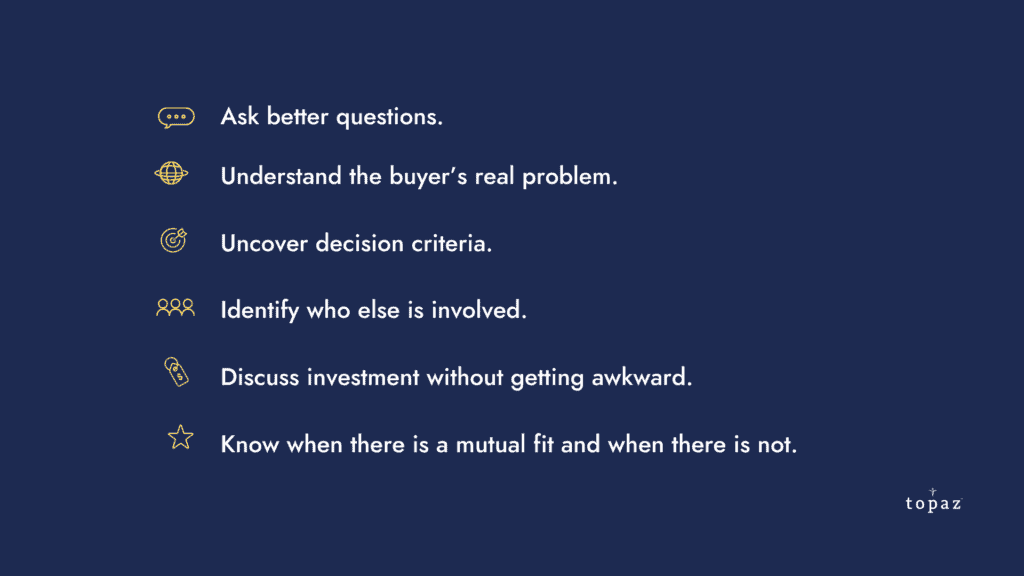
- Ask better questions.
- Understand the buyer’s real problem.
- Uncover decision criteria.
- Identify who else is involved.
- Discuss investment without getting awkward.
- Know when there is a mutual fit and when there is not.
If each salesperson is doing their own thing, forecasting becomes harder, coaching becomes vague, and growth becomes dependent on personalities.
Poor Sales Hiring Can Turn Growth Plans Into Guesswork
Hiring salespeople is not like hiring for most other roles.
Candidates may interview well but struggle to sell. They may sound assured, tell strong stories, know the industry, and have experience with competitors or a decent track record.
Hiring mistakes are a key risk: candidates may lack core sales abilities needed for growth, despite strong résumés.
Sales hiring needs a more disciplined process.
That includes clearly defining the role, using a sales-specific scorecard, assessing sales strengths and weaknesses, and putting candidates in role-play situations that reveal how they think and behave in real time.
Without that, the company may be hiring based on charm, familiarity, or résumé comfort.
For an investor, poor sales hiring creates a direct risk to growth. If the post-acquisition plan includes adding salespeople, the hiring process must be comprehensive enough to support it.
A good question to ask: How does this company know a sales candidate can actually sell before making the offer?
A Sales Due Diligence Checklist
Most diligence reviews already cover areas such as financial performance, customer concentration, legal exposure, operations, leadership, market opportunity, technology, and culture. It is imperative to add sales capability to this list.
Here are practical questions to include:
- Owner Dependency
Who owns the most important customer and prospect relationships? What percentage of new business still depends on the owner. - Sales Leadership
Who leads the sales team? Were they trained to manage, coach, and hold people accountable, or were they promoted because they sold well? - Sales Process
Is there a documented sales process the team actually uses, or does every salesperson run their own playbook? - Opportunity Creation
Can the sales team create new opportunities, or are they mostly managing existing relationships and responding to inbound demand? - Qualification Discipline
How does the team decide which opportunities deserve time, energy, and resources? - Sales Hiring
How are salespeople screened, interviewed, assessed, and selected? Is there a consistent process? - Sales Manager or CEO Candidate Fit
If someone is being promoted or hired to lead growth, have their sales leadership strengths and weaknesses been evaluated? - Coaching Cadence
How often does the sales leader coach the team on real conversations, not just pipeline status? - Forecast Reliability
Does the forecast reflect buyer behavior, or does it reflect salesperson optimism? - Scalability
If the company doubled the sales team, would the current process help them ramp successfully, or create more chaos?
Make Sales Risk Visible Earlier
Sales risk does not always show up as a bad number. Sometimes it shows up as a founder who is still carrying the room. Sometimes it is a sales manager who was never taught how to coach. Sometimes it is a team full of nice people who cannot create new opportunities.
The danger is not that these issues exist. Most companies have some version of them.
The real danger is discovering these hidden sales risks only after the deal closes and plans are underway.
If you are evaluating a company whose future growth depends on sales performance, Topaz can help assess sales risks before assumptions become costly. Unlock lasting growth by making sure the sales function is ready to scale. Schedule a strategic conversation with Topaz to take a practical look at the sales team, sales leadership, and hiring process behind the deal.
FAQs
What sales risks should investors look for during due diligence?
Investors should look for founder-led sales, weak sales leadership, no repeatable sales process, poor sales hiring practices, and a sales team that struggles to create new opportunities. Revenue may look strong, but the real question is whether the sales engine can keep producing when ownership, leadership, or growth expectations change.
Why does the sales hiring process matter in due diligence?
If the growth plan depends on adding salespeople, the company needs a hiring process that can identify people who can actually sell. Many bad sales hires look strong in interviews. A disciplined sales hiring process should include role definition, structured interviews, sales-specific assessments, and real-world role play.
How can Topaz help investors evaluate sales capability?
Topaz helps investors and acquisition-minded leaders assess the sales process, sales leadership, team capability, and sales hiring practices behind the numbers. The goal is to uncover hidden sales risks early, before they become expensive post-close problems.