Being a great seller does not guarantee success as a sales manager. Yet, companies often make the costly mistake of assuming top producers can automatically lead teams. It seems logical: reward performance, keep talent engaged, and let a proven seller help others win. In reality, this move often backfires.
Sales leadership is a different job. Selling is about individual performance. Leadership is influence. Sales leadership refers to an individual’s ability to influence, motivate, and enable others to contribute to the organization’s sales success. That takes a very different set of muscles than carrying a bag.
The Cost of Promoting the Wrong Person
I have seen this play out firsthand. We trained a sales team in the Buyer Facilitator process, and one receptive participant quickly became the top producer. The CEO noticed and promoted him to sales manager within six months—a well-earned move, given his results, reputation, and opportunity to keep his book of business while earning a share of team commissions.
That promotion ended up costing everyone.
He lacked the skills required to lead and manage. Coaching was harder than he expected. Accountability was more burdensome than it looked from the outside. His leadership approach did not multiply the team’s effectiveness. It diminished it. He became overwhelmed and frustrated. His own book of business started to slip, and the team still was not producing at the level the company needed. Before long, he left. Now the company had lost its best-trained salesperson and was trying to replace not just a sales manager but also a top producer.
This is the trap: companies assume that strong performers can develop other strong performers. That is a costly mistake. Performing and developing others require different abilities.
Selling Ability and Leadership Ability Are Different Muscles
A strong salesperson often succeeds through instinct, timing, confidence, resilience, and personal drive. A strong sales manager has to slow things down and help others think more clearly. They need to coach behavior, not just talk about outcomes. They need to create accountability for each team member without becoming the team’s babysitter. They need to inspect conversations, not just dashboards. They need to develop judgment, not dependency.
That shift is harder than most leaders realize. Top producers are used to making things happen. They know how to gauge the room, recover a shaky conversation, and move a deal forward. When they become managers, that same instinct can work against them. A rep brings them a stuck opportunity, and instead of coaching the rep’s thinking, they jump in. They rewrite the email. They take over the call. They tell the rep exactly what to say. It feels efficient. It appears helpful. It also trains the rep to wait for rescue.
They may believe they’re doing the rep a solid, but that is not leadership.
What Strong Sales Managers Actually Do
Good sales managers act as multipliers. They increase the capability of the people around them. They do not just help close deals. They help reps understand why deals move, why they stall, what the buyer is really saying, and where assumptions are sneaking in. They teach reps how to build rapport, set ground rules, uncover real pain points, learn about the investment, and clarify how the buyer will make a decision. They help the salesperson become more thoughtful, more disciplined, and more independent over time.
That kind of leadership requires more than charm and selling skills. It demands specific traits and competencies: conviction in leadership without seeking approval, emotional self-control, supportive beliefs, and a positive buy-in cycle when coaching.
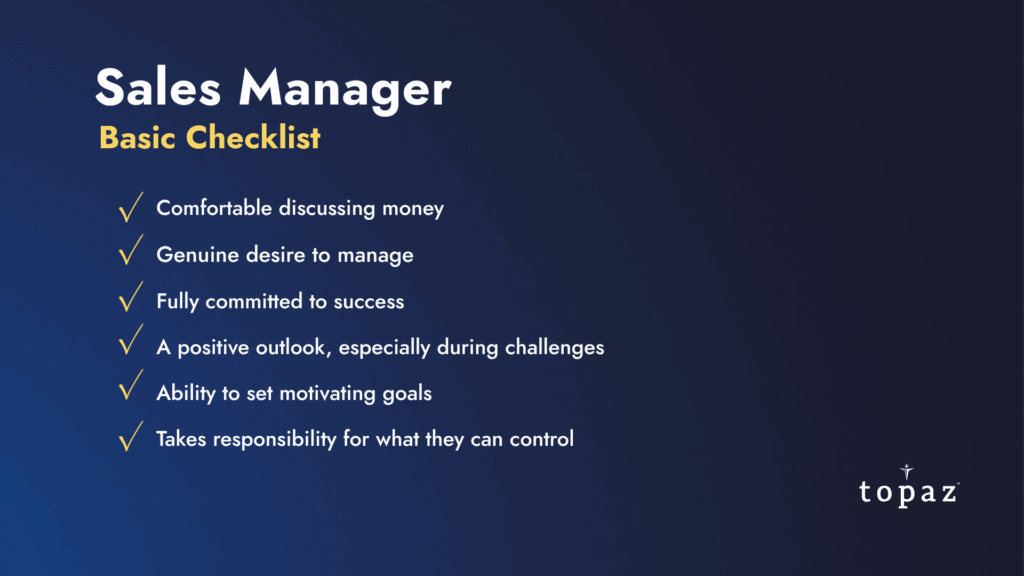
Sales Manager Basic Checklist
- Comfortable discussing money
- Genuine desire to manage (not just for status or compensation)
- Fully committed to success
- A positive outlook, especially during challenges
- Ability to set motivating goals
- Takes responsibility for what they can control and does not blame the market, leads, or representatives.
Read that list carefully, and you will notice something important. Those are not just selling traits. Those are leadership traits.
This is where CEOs and VPs of Sales need to show some discipline. Before promoting a top producer, ask a harder question than, “Are they performing?”
Ask, “Do they actually want to lead, and are they equipped to develop other people?”
Some top salespeople do not want to coach. They do not want to inspect behavior. They do not want to hold peers accountable. They do not want their success tied to others’ development. They may say yes to the title because it looks flattering, because the pay structure sounds attractive, or because it feels like the next rung on the ladder. Then six months later, everyone is miserable.
This decision prioritizes leadership readiness over revenue production.
A Better Way to Evaluate Sales Management Potential
A CEO should think twice before promoting a top salesperson into management without first understanding whether that person has the traits, beliefs, and commitment required to lead. And top salespeople should be careful too. A management role may seem like a great next step, but it is only a good move if they fully understand its responsibilities and demands. Otherwise, they may trade a job they are excellent at for one that drains them, exposes them, and pulls them away from their strengths.
The best companies get in front of this. They stop treating promotion as a reward and start treating it as a fit decision. They evaluate whether an individual can influence, motivate, and enable others. They look for coaching capacity, emotional steadiness, accountability, and a desire to lead. They do not guess.
If you have a top performer in mind for your next sales manager role, do one practical thing before making the promotion. Have them complete a sales evaluation that uncovers their sales management strengths and weaknesses. That single step could save you from losing a top producer, miscasting a leader, and opening a hole in two seats instead of one.
Download our sample sales assessment to see the kind of insight that can help you protect your team, your talent, and your next leadership decision.